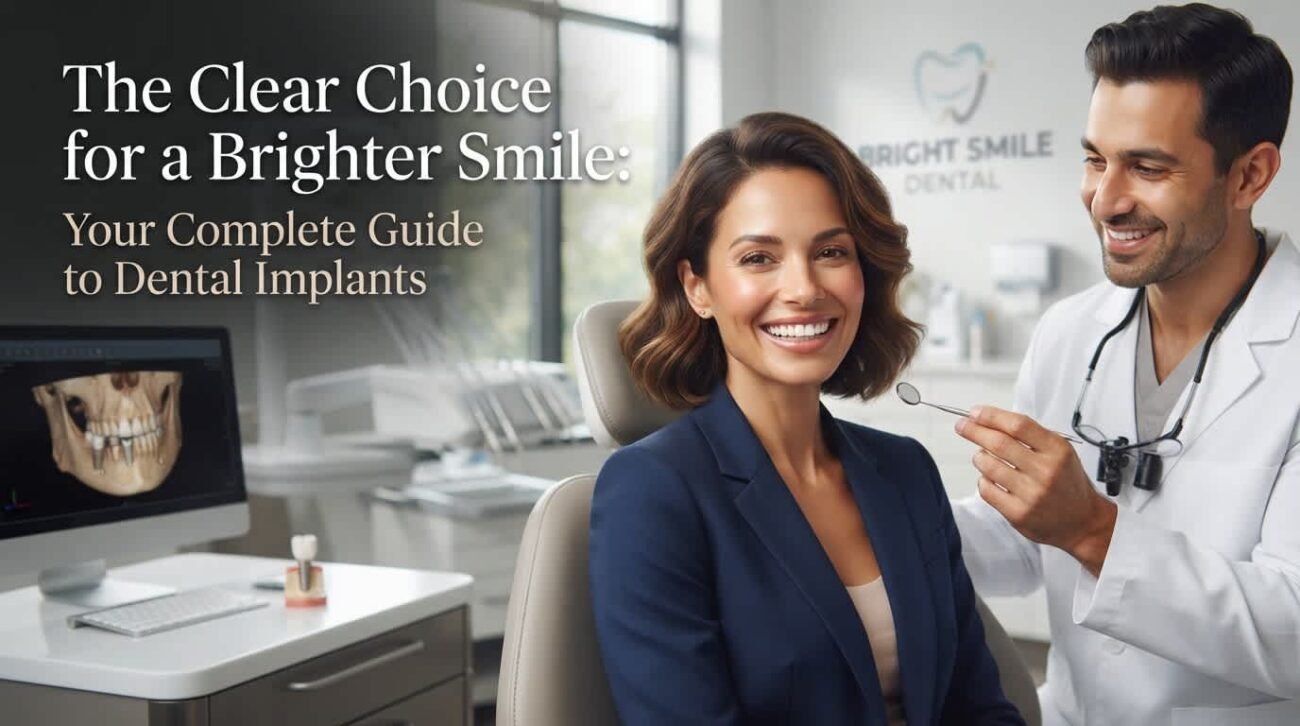
Looking for a clear choice for your smile? Read our honest guide on dental implants, costs, process, pros, cons, and helpful FAQs.
Finding the right path to restore a missing smile can feel overwhelming. Many adults struggle with failing teeth, uncomfortable dentures, and endless dental appointments. When you want a permanent fix, you need a clear choice that you can trust with your health and your wallet. Dental implants have changed the way modern dentistry handles missing teeth. Instead of hiding behind loose dentures, patients can now choose fixed teeth that feel and look completely real. This guide will walk you through everything you need to know about permanent smile restorations, what the process looks like, and how to pick the right provider for your unique needs.
Table of Contents
What Are Permanent Dental Implants?
Dental implants are tiny titanium posts that act as artificial roots for your teeth. A skilled surgeon places these posts directly into your jawbone during a minor medical procedure. Over a few months, your jawbone heals and fuses tightly around the metal post. This natural bonding process creates a rock-solid foundation for a brand-new set of custom replacement teeth. Unlike regular dentures that can slip around or click when you talk, implants stay firmly locked in place. They give you back nearly full chewing power so you can eat your favorite foods again without any fear.
The Evolution of Full Mouth Restoration
Decades ago, options for replacing a full row of teeth were very limited. Most people had to rely on removable plastic dentures that required messy adhesives and caused sore gums. Today, modern dental technology offers a much better clear choice for full mouth reconstruction. Techniques like All-on-4 allow specialists to anchor an entire arch of teeth using just four strategically placed implants. This smart engineering saves time, lowers overall surgical stress, and cuts down on the need for extra bone grafting surgeries for many patients.
Understanding the Financial Investment
Investing in your dental health is a major financial decision for any household. The total price tag for a full arch restoration typically ranges from fourteen thousand to thirty-six thousand dollars. While this number sounds high, it helps to look at what is included in the package. A comprehensive fee usually covers your initial 3D scans, the surgical placement, the anesthesia team, temporary teeth, and your final permanent zirconia arch. Many centers also offer monthly financing plans to help spread out the payments into manageable monthly chunks.
Comparing National Chains and Local Dentists
When researching tooth replacement options, you will likely notice two main types of providers. On one side, you have large specialized corporate centers that focus exclusively on full-arch restorations. On the other side, you have private local periodontists and prosthodontists. Corporate chains often house the surgeon, lab technicians, and imaging machines all under one roof for maximum speed. Meanwhile, local private dentists might offer more personalized, one-on-one continuity of care over many years. Weighing these differences is a clear choice that depends heavily on your personal preferences.
Step-by-Step Treatment Journey
Knowing what to expect can calm your nerves before walking into the dental office. The journey always starts with an in-depth consultation and high-tech 3D imaging to map your jawbone. Next comes the smile design appointment where your doctor plans the exact look, color, and fit of your future teeth. On surgery day, you receive sedation medicine so you stay completely comfortable and pain-free while the posts are placed. After a healing period of a few months, your final custom teeth are securely attached.
Biography and Qualifications Table
To help you understand who handles your care, here is a detailed breakdown of the dental specialists involved in your treatment journey:
| Specialist Title | Primary Role & Education | Key Responsibilities |
| Oral & Maxillofacial Surgeon | Dental degree + 4 to 6 years of surgical residency | Performs tooth extractions, bone grafting, and precise placement of titanium implant posts into the jawbone. |
| Prosthodontist | Dental degree + 3 years of advanced restorative training | Specializes in the aesthetic design, fitting, and fine-tuning of crowns, bridges, and full-arch teeth. |
| Periodontist | Dental degree + 3 years focusing on gums and supporting bone | Treats gum disease and ensures the soft tissues surrounding your new implants remain healthy and strong. |
| Dental Laboratory Technician | Specialized certification in dental ceramics and engineering | Crafts custom-milled zirconia or porcelain teeth that match your facial structure and natural bite. |
Common Pros and Cons to Consider
Every major medical procedure comes with its own set of advantages and drawbacks. On the positive side, permanent implants prevent ongoing bone loss in your jaw, restore your facial structure, and eliminate the daily hassle of denture glue. On the downside, the upfront financial cost is steep, and the surgical healing process requires patience. Some patients also note that corporate centers can sometimes use high-pressure sales tactics. Taking time to research independent reviews ensures you make a balanced choice.
Real Patient Insights and Experiences
Listening to real people who have gone through the implant process provides invaluable wisdom. Many patients report that getting fixed teeth completely transformed their social confidence and mental health. They no longer feel embarrassed to smile or laugh in public photos. However, other reviewers emphasize the importance of reading the fine print on warranties and asking detailed questions about follow-up care. Finding a clinic that provides compassionate, long-term support makes all the difference in your overall satisfaction.
Alternative Options for Missing Teeth
Dental implants are fantastic, but they are not the only solution available on the market. If surgery sounds too intense or expensive, traditional fixed dental bridges or removable partial dentures are alternative paths to explore. Implant-retained snap-in dentures offer a middle-ground solution. They lock onto a few mini-implants for extra stability while still allowing you to pop them out easily for daily cleaning. Discussing these choices with an independent dentist helps tailor a plan to your budget.
Tips for Maintaining Your New Smile
Protecting your investment requires a dedicated daily hygiene routine. Even though artificial teeth cannot get cavities, the surrounding gum tissues can still become infected if plaque builds up. Use specialized floss threaders, water flossers, and antibacterial mouthwashes recommended by your dental hygienist. Regular checkups every six months allow your specialist to check the screws and bite alignment. Treating your new smile with care guarantees it will last for many decades to come.
Conclusion
Taking control of your oral health is a powerful step toward a happier lifestyle. Whether you choose a national implant center or a trusted local clinic, doing your homework protects your health. If you are ready to explore your options, schedule a consultation today to discover your personal clear choice for a brilliant, lasting smile.
Frequently Asked Questions
How long do permanent dental implants last?
Dental implants are engineered to last for several decades or even a lifetime if you practice good oral hygiene and visit your dentist regularly. While the titanium post fuses permanently with your bone, the visible crown portion may experience normal wear over many years and can be easily repaired or replaced.
Does the implant surgery hurt?
The surgical procedure itself is virtually painless because doctors use local anesthesia and strong sedation options like IV sedation. Most patients report feeling mild soreness and gum swelling for a few days after the procedure, which is easily managed with regular over-the-counter pain relievers.
Am I too old to get dental implants?
Age alone is rarely a disqualifying factor for healthy adults. As long as your overall health is stable and you have enough healthy jawbone density to support the posts, seniors can successfully receive dental implants and enjoy a restored quality of life.
Can dental insurance help pay for the procedure?
Most standard dental insurance plans view full-arch implants as a cosmetic or elective procedure and offer very limited coverage. However, some providers may partially reimburse portions of the preliminary extractions or imaging. It is always smart to request a detailed itemized invoice to submit to your insurance provider.
What happens if a bone graft is required first?
If you have experienced bone loss in your jaw over the years, your surgeon may recommend a bone graft to build up a solid foundation. This extra step adds to the healing timeline and overall cost, but it ensures that your future implants remain stable and secure for the long run.
Are there alternative solutions if I cannot afford implants?
Yes, traditional removable dentures, resin-bonded bridges, and snap-in implant-retained overdentures serve as more budget-friendly alternatives. These options restore basic chewing function and aesthetics while keeping upfront costs much lower than a full fixed arch.
